
When I received the Census my first reaction was, “What exactly are we planning for?”
Global warming waits for no-one, it has its own timetable and brought a summer that left thousands dead and millions, if not billions, barely survived, making 2026 officially the hottest year on record.
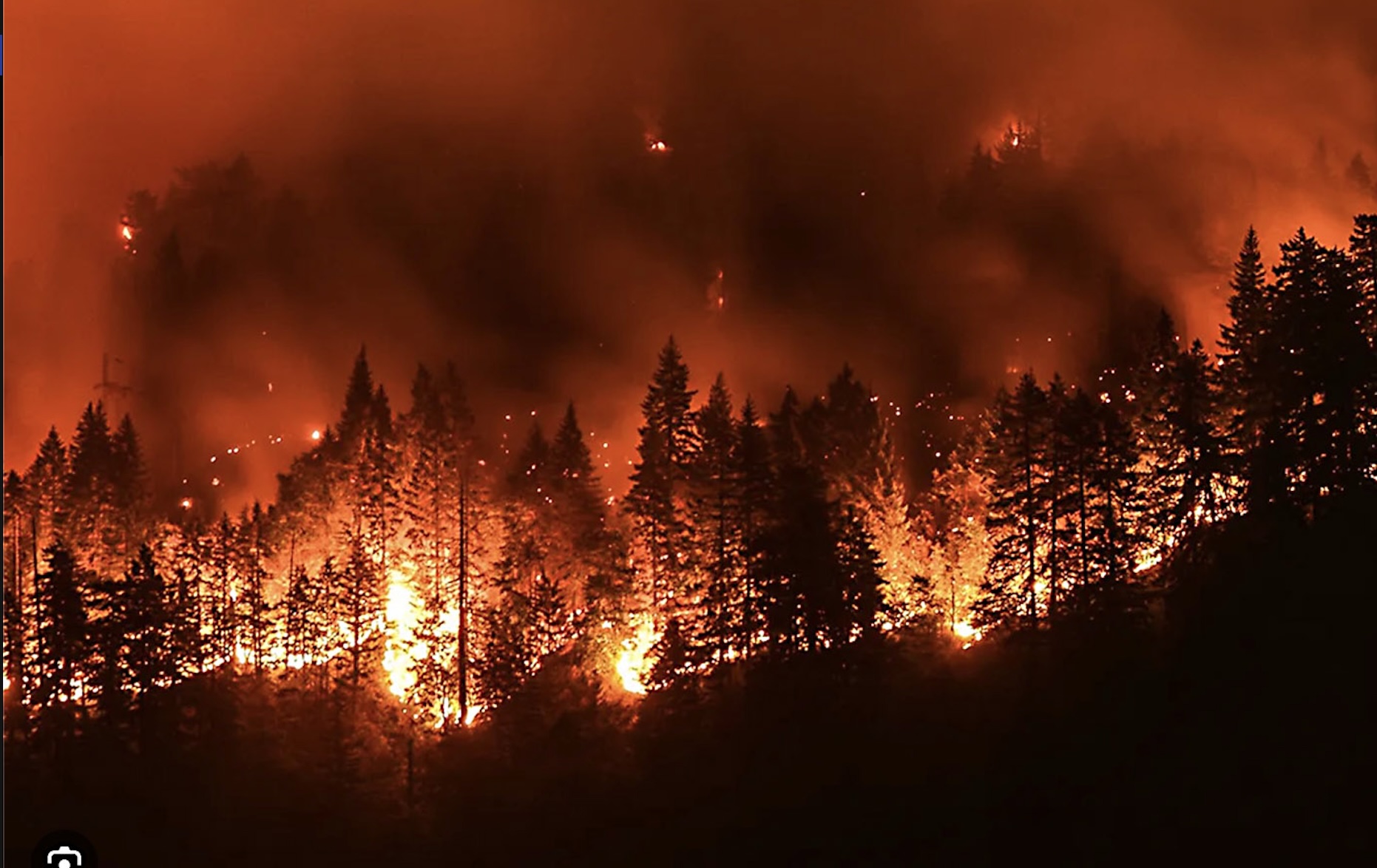
Temperatures were smashed worldwide, along with a prolific number of wildfires, that saw 616,000 hectares incinerated in Europe, the US roughly 3.33 million hectares and Canada over 4 million hectares.
Research from the World Resources Institute revealed wildfires have erased roughly 1.5 million square kilometres of forests in the last 24 years, equal in size to Mongolia, and tree cover loss has escalated to double the pace of 20 years ago, as the planet loses forests at an unsustainable rate.
Those nations worst affected are Brazil, Bolivia, Russia, Canada and Australia, where we’ve had 883 square kilometres of forests go up in flames from 2001 through to 2024.
Calum Cunningham from the University of Tasmania’s fire centre explains, “Massive forest fire seasons threaten to reshape the atmosphere by releasing huge amounts of carbon dioxide, which could create a feedback loop – more warming, worse fire weather, more fire. That’s the ultimate fear!”
In the past 25 years, wildfires and biomass have released roughly 150 to 200 billion tonnes of carbon dioxide into the atmosphere and today accounts for 20% of the planet’s greenhouse gas emissions. These rising emissions are feeding one of the most powerful weather patterns on the planet, an El Niño and it’s gaining strength.
Berkeley Earth is a non-profit research group and their data points to an unusually powerful El Niño for 2026 through to 2027, something scientists weren’t expecting for another decade or more, and the odds are high and predicted to hit Australia hard.
Scientists gauge an El Niño’s potential impact from the sea surface temperature in the Eastern tropical Pacific Ocean and projections suggest temperatures will hit 4oC higher than normal sea surface temperatures.
El Niños that reach or exceed 2oC are defined as a super El Niño, so what this one is capable of is anyone’s guess and scientists warn, every El Niño from here on in will pack a bigger punch than the one before.
Back to back heatwaves brought temperatures 40oC and higher across Europe and provisional data and estimates show 35,000 to 36,000 people died from heat related deaths.
The data only covered half the continent and doesn’t include August, so the figure is much higher.
According to the World Health Organisation, heatstroke is the greatest natural hazard with studies uncovering approximately 489,000 people have died from heat related causes annually between 2000 and 2019.
Australians need to be reminded that they’re living on the same planet and they seem to have forgotten our infamous nickname, the sunburnt country. Heatwaves are a standard trademark and since 1890 more Australians have died from heatstroke, than floods, cyclones, severe storms, fires and earthquakes combined.
Data collected by Monash University showed 1,009 Australians died from heat-related causes between 2016 to 2019, so the risks for us as a nation are much higher, especially when this summer is predicted to bring record heatwaves, droughts and wildfires.
In addition, Australia has another climate driver associated with warmer and drier conditions, a positive Indian Ocean Dipole (IOD) is developing, reducing moisture laden air to Australia, which means less rain.
A team of 60 international scientists put together a report for Planetary Boundaries Science Lab at Potsdam Institute for Climate Impact Research and found of the nine established boundaries, seven have been breached.
Climate change, change in biosphere integrity, land system change, freshwater change, modification of biogeochemicals, introduction of man-made chemicals and ocean acidification.
Boris Sakschawski, head author of the report summarised it very clearly. “The risk of large scale, persistent and potentially irreversible change is increasing, while our margin for error in tackling these problems is shrinking.”
Mother Earth is hanging on for grim life, yet society hasn’t even got the decency to show some restraint and it seems the only solution is, put their hands behind their back and handcuff them! Or maybe a strait jacket is the only answer.
This is global warming in its infancy, so what can we expect when it reaches maturity? I doubt there’ll be anyone left to tell the tale.
You reap what you sow, but all we did was reap. Now we’re stranded on a planet that’s becoming increasingly hostile and eventually will be uninhabitable. And no ifs or buts about it. Can you tell me what that spells? Extinction. Maybe it needs to be said again and again.
What does that spell? E X T I N C T I O N