
The release of the final CSIRO Northern Rivers Resilience Initiative (NRRI) Report on 30th June has understandably dominated discussion across our region and in Council.
The report presents high resolution hydrological modelling and explores a range of flood mitigation scenarios for the Richmond River catchment.
While I welcome the science and the improved understanding of flood behaviour it provides, I remain deeply concerned by every detention dam scenario modelled for the upper catchment.
I strongly oppose progressing these scenarios to a feasibility study and believe public investment should instead be directed towards climate adaptation, nature-based solutions and, where appropriate, planned retreat.
The level of community engagement has been extraordinary. Hundreds of people attended recent information sessions in Kyogle, Lismore, Ballina, Casino and Woodburn, sending a clear message that people care deeply about the future of our river, farmland, forests, landscapes and communities.
I hope that message is heard loudly by the NSW Reconstruction Authority (RA), the National Emergency Management Agency (NEMA), councillors and decision makers at all levels of government.
I was also disappointed that Council chose to rush through a Mayoral Minute to incorporate Bundle 2 from the CSIRO report into the Flood Risk Management Plan, which was not even the recommendation, before councillors and staff had received the scheduled workshop briefing.
Given the significance of the report and the absence of the detailed inundation maps, I believe the community deserved better, and councillors deserved more time to fully understand the implications before the matter was progressed. I voted against this motion alongside Cr Guise.
Restoring wetlands and floodplains, protecting and revegetating our catchments, improving emergency preparedness, strengthening planning controls and supporting people to relocate from the highest flood risk areas will build resilience while working with rather than against the natural landscape.
For the Nimbin community, the potential impacts are particularly concerning and require vigilance.
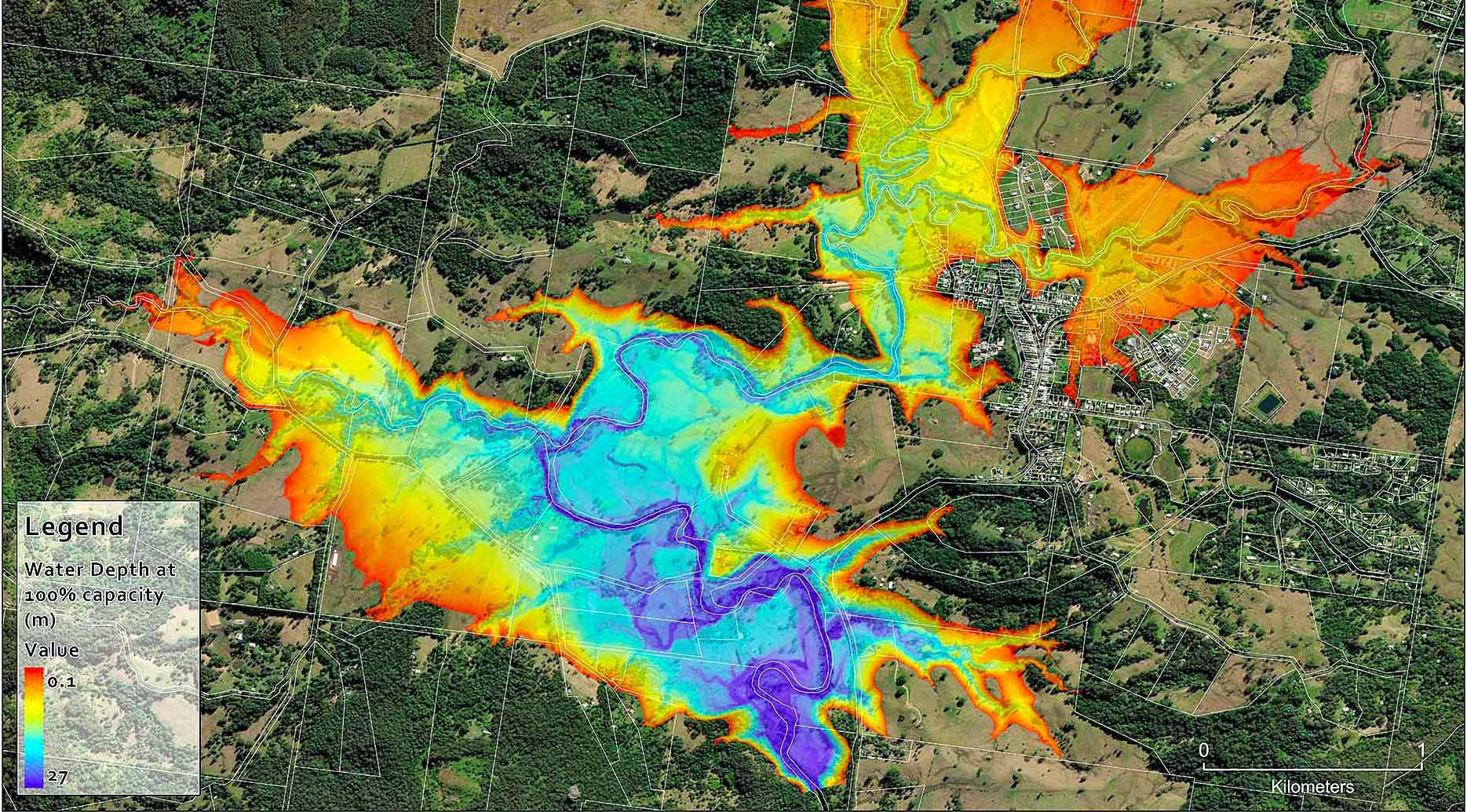
Based on the co-ordinates released by CSIRO and the community-produced mapping, the Goolmangar detention dam scenario appears to affect one of the region’s most significant Aboriginal cultural sites, the Nimbin Rocks, deeply respected and valued by the wider community.
Surrounding farms, businesses, homes, forests and rural properties would also be inundated. If the community mapping accurately reflects the modelling, the consequences for Nimbin and its surrounding communities during a major flood event would be catastrophic.
The absence of detailed inundation maps alongside the report has made meaningful community consultation extremely difficult, sadly a theme that continues to recur throughout the post-2022 flood recovery. We are advised that NEMA expects to release the final maps by mid August.
Despite the shock, it has also been inspiring to see the way communities have come together. The response from the Rock Valley community has been remarkable. Faced with modelling that would drastically change the future of their valley, they have organised, shared information and advocated tirelessly for their community. Their experience also highlights how important clear information is.
While Rock Valley had an indicative footprint map, communities such as Nimbin have had no equivalent mapping to help understand the potential impacts. In the coming weeks, the Nimbin community will gather for a town meeting to hear the latest information, ask questions and discuss the path forward.
Lismore’s Flood Risk Management Committee will also consider expanding its membership to include two additional community representatives, one from the northern rural communities and one from the southern rural communities within the LGA.
If endorsed, Expressions of Interest will be invited, providing an opportunity for both the upper and lower catchments to be represented as future flood mitigation options are considered. I encourage people to apply.
It is important to remember that the CSIRO report examined hydrological scenarios only. It did not assess the environmental, ecological, cultural, social or economic consequences of those scenarios, which remain critical considerations before any future decisions are made.
For me, the choice is clear. I will continue to stand with our communities in saying no to detention dams and yes to a future built on climate adaptation, nature-based solutions, planned retreat where appropriate, healthy rivers, thriving ecosystems and resilient communities.