
Engineers often look at the world slightly differently. It is usually from a rational base, even if some people say they are a bit weird about numbers.
So let’s look at a number. The volume of Sydney Harbour is 562 million cubic metres. The combined volume of the proposed detention dams is 565 million cubic metres. Imagine Sydney Harbour sitting up there in the hills.
A dams engineer has estimated the total cost of the dams to be up to $50 billion. Imagine what that would buy. Imagine taking that out of the economy. If you think about it though, to capture a Sydney Harbour in the Richmond Valley hills would be quite an undertaking.
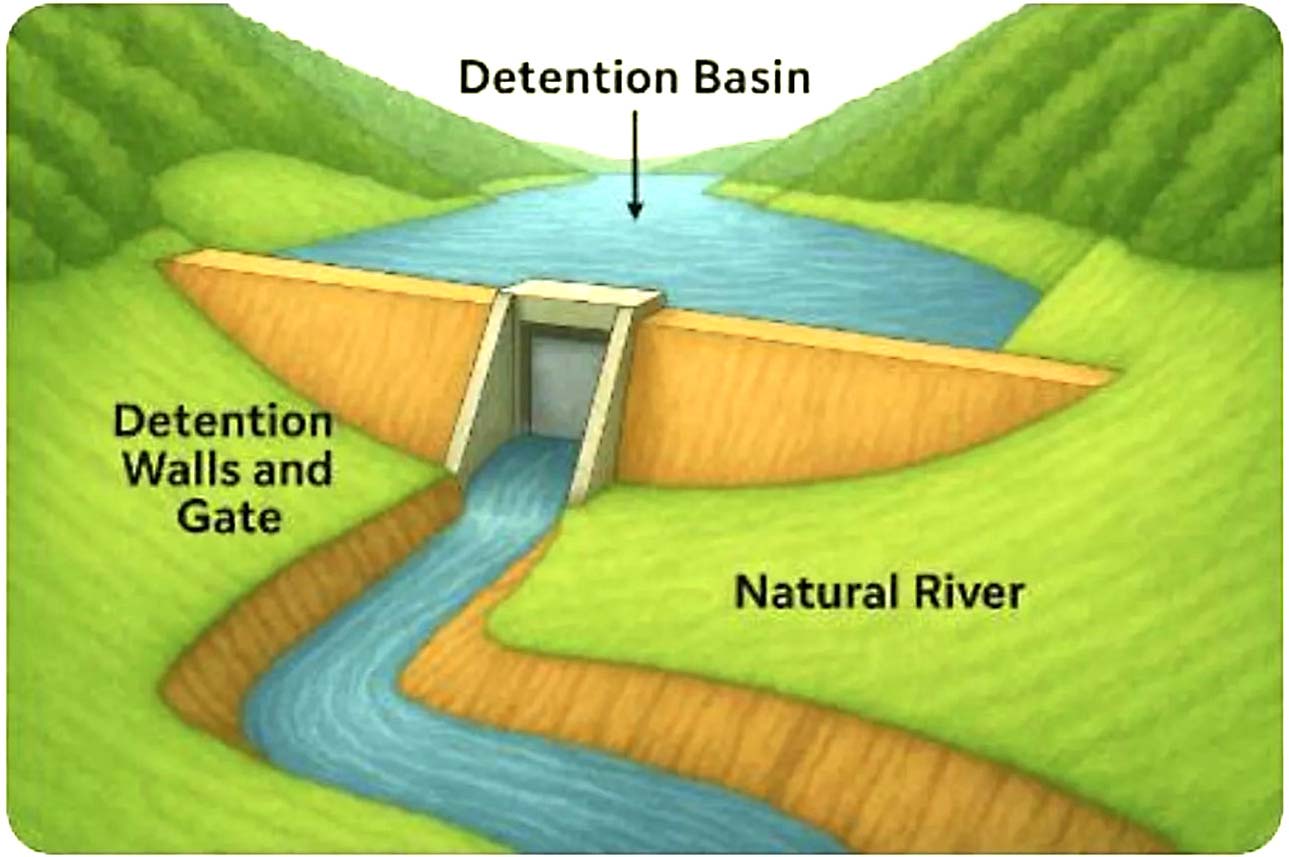
Figure 10 (pictured), on page 18 of the report, purports to be a representation of the proposed dams but would someone draw something like that? Maybe, but certainly no-one who knew anything about dams. It is likely to be an AI characterisation. That’s speculation though. What is not speculation is the very serious engineering failures not recognised in the report.
When you draw water down in a dam, some of it remains in the soil on the sides until it slowly releases. If the water remains trapped, it causes loss of friction and the slope slides away. Different soils have different rates, but the rates advised in the report are all very high, especially in country that has already demonstrated that it is prone to landslips.
Even just flooding the hills may well trigger landslides into the water that is being stored. It is highly unlikely that the chance of failure could be limited to 1 in 10,000 which is the probable minimum level of safety required.
Control gates
The control gates are shown as full height. This is nonsense. Dam gates sit on top of spillways to control the release of water. At the bottom of the dam there is usually a pipe to drain the dam and on this pipe is a cone valve. This looks a bit like a jet engine and is very expensive.
Sluice gates are gates that lift up, allowing flow underneath. CSIRO community sessions seem to describe overflow gates, known as tilting weir gates. Either option is nonsensical in engineering terms.
ANCOLD, Australian National Committee on Large Dams, would almost certainly be involved with guidelines that must be followed. In fact, under the NSW Dam Safety Act and Regulation it would be classified as a dam. That would mean the dam would need a spillway capable of taking the Probable Maximum Flood (PMF).
The PMF for Lismore in 2022 was a river height of 16.5m. That is 2m higher than actually occurred. New Australian Rainfall and Runoff requirements will increase this significantly. These would be very big spillways indeed.
To bring out a report without considering whether the recommendations are feasible is certainly putting the cart before the horse. The question is why? Was it just to give the people who commissioned the report the answers they wanted? Maybe time will tell.
In the meantime, a lot of unlucky people will have watched their property values plummet and been subjected to significant personal stress. For what?
Steve Posselt has been a civil engineer in the water industry for over 30 years, and is a member of Engineers Australia.