We have finally got medicinal cannabis driving laws through Parliament – but importantly for anyone who uses cannabis and drives, even though the law has changed, the new scheme hasn’t started yet, and it’s not expected to until 2027.
Until then the existing law still applies, and the presence of THC detected through roadside drug testing can still cost you your licence, whether you are impaired or not.
When the changes do commence, they will apply to a specific group of medicinal cannabis patients. You will need an unrestricted NSW driver licence, a current prescription, registration with Transport for NSW and completion of an education program.
Police will still be pulling people over and you can still be swabbed for THC. If you test positive, you will still be prohibited from driving for 24 hours while the sample goes to a laboratory.
If that saliva test comes back with more than 50 nanograms per millilitre (ng/ mL) of THC then you can face a $722 fine and at least three months off the road.
To put this plainly, a single use of cannabis could take one to three days before your body drops below 50 nanograms – and regular users could stay over the threshold for one to three weeks.
If you use cannabis recreationally, or medicinally but aren’t eligible and registered under the new scheme, the fact that you are completely sober when you drive doesn’t protect you from committing an offence.
So this is an incremental reform to a developing disconnect between medicine and driving laws, but it’s also a reminder of how long it can take governments to adapt to evidence!
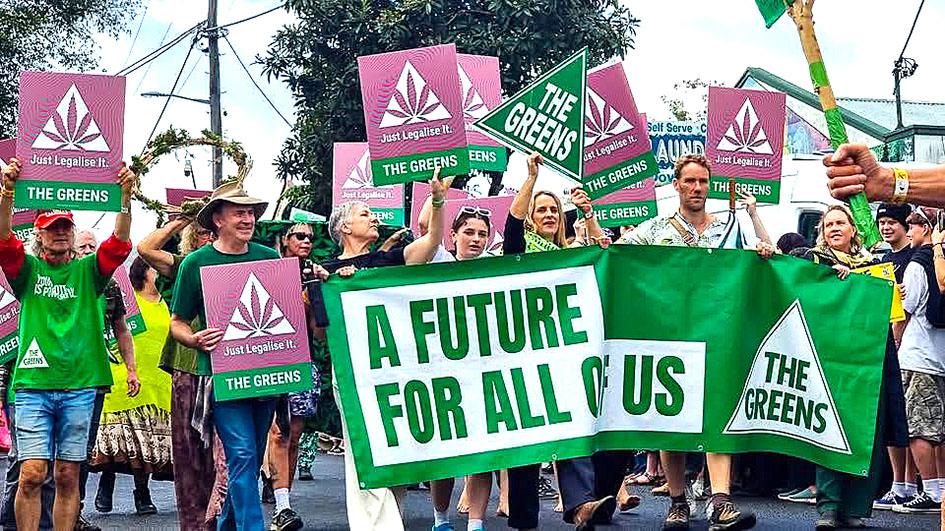
The Greens have been fighting this for years, and since 2019 we’ve been calling for NSW roadside drug testing to move towards an impairment-based testing system.
Here at home, the Richmond-Tweed region was at that time recording 470 drug-driving convictions per 100,000 people, more than five times the NSW average.
That work led to my Greens colleague Cate Faehrmann introducing laws in the Parliament in 2021 that would protect people with medicinal cannabis prescriptions from being targeted by these laws. But just six MPs supported the law being changed.
Four years later, the Parliament has finally moved, and with the Greens in the balance of power, we have passed laws.
There is some justice in that, and enormous credit belongs to the patients, advocates, doctors, drug law reform campaigners and people who have kept telling their stories.
Losing a licence in Nimbin, Lismore or anywhere across our region can mean losing your job, being unable to get to medical appointments, struggling to care for family, or simply becoming isolated.
Public transport is hardly an alternative for many people here. These practical consequences were recognised through the NSW Drug Summit process as people called for a distinction between THC being present and a person actually being impaired.
Somebody taking a medicine lawfully prescribed by their doctor, who is not impaired and is driving safely, should not lose their licence simply because traces of that medicine remain detectable in their body.
The Greens’ position is to legalise and regulate cannabis for adults and to remove criminal penalties for personal possession and use of other drugs, moving drug policy towards health, harm reduction and treatment. We have consistently supported drug-driving laws directed at impairment and actual road safety risk.
Cannabis legalisation and drug decriminalisation are different things, and both form part of moving away from a system where criminal law has carried far too much of the burden of responding to drug use.
Driving while impaired by any drug is dangerous and should remain an offence.
But criminal law shouldn’t treat the mere presence of a substance as though it proves impairment, particularly when THC can remain detectable for weeks after any impairment has passed.
Thanks to continuous pressure from the Greens, a handful of other MPs, advocates and the community, the Government has now accepted that proposition far enough to create this new system for prescribed medicinal cannabis.
The state has spent decades trying to police drugs out of existence; it’s caused so much harm and cost so much in public resources.
The Greens have been arguing for another approach for a long time. Regulate cannabis, decriminalise personal drug use, invest properly in treatment and harm reduction, and make laws about dangerous driving actually respond to dangerous driving.
After years of campaigning, NSW has finally moved one piece of that puzzle. There is plenty more work ahead and we won’t stop until the failed war on drugs ends.