
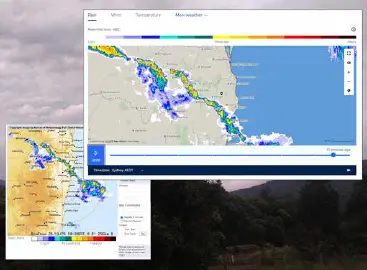
The Bureau of Meteorology (BOM) starts this year’s storm season under heavy scrutiny, as the cost of its new website upgrade is revealed to be about $96.5 million. That figure is a far cry from the $4.1 million originally cited for the re-design.
New BOM CEO Stuart Minchin told media that the website re-design is not just cosmetic but part of a much broader program including backup systems and large infrastructure needs, explaining that “the website component is about 10% of a much larger program.”
But outside of capital cities, many users say the rollout has made weather information harder to access, not easier. Complaints from farmers, regional residents and emergency volunteers flooded in soon after October’s launch, particularly about radar visibility, localised observations and the difficulty locating small towns.
The backlash was strong enough that the BOM quickly restored its old rain radar colours. Despite the change, users continue to report clunky searches, confusing navigation and missing or buried local data.
With the Northern Rivers now stepping into the summer storm period, frustration over website glitches carries real weight. In a region shaped by weather extremes, reliable forecasting is more than a convenience. The devastation of 2022 hasn’t been forgotten, changing how residents pay attention to every creek level, storm forecast and rainfall totals.
More recent severe weather has kept that awareness close. Cyclone Alfred brushed the coast in 2025, and frequent intense storms have hit the hills, including one that brought down the large tree outside the Church of Aquarius in Nimbin’s main street last summer. Events like these leave locals checking the radar on their phones as often as checking the sky.
Government pressure on the bureau is now mounting. Environment and Water Minister Murray Watt said he had asked the BOM leadership to explain “how we got to this position with this cost, with the problems.”
While the bureau defends the long-term purpose of the upgrade, users are still waiting for improvements promised on its own website, where the BOM acknowledges work is ongoing to “improve navigation and restore popular functionality.”
Forecasting tools matter everywhere, but they matter differently in places like Nimbin, where storms close roads, creeks rise fast and trees frequently come down. Safety often depends on access to the most up-to-date information possible.
Locals might not expect the weather to behave, but they do expect the official weather service to be readable, reliable and accessible.
While the Bureau irons out all kinks in the new website, the old site is still available at reg.bom.gov.au.
With humidity rising, the cicadas starting up and another storm season taking shape across the Northern Rivers, the success or failure of the BOM’s costly digital overhaul is about to be tested not in Canberra, but in regions most prone to severe weather events.