
Australia has an opportunity to lead the way in recovering valuable building materials, according to a new research report from Living Lab Northern Rivers, Circular Timber.
The report shows that carefully deconstructing buildings – rather than demolishing them – can save high-quality timber, reduce waste and create local jobs, and recommends national guidelines so the approach can be adopted more widely.
After the 2022 floods, the NSW Government has approved offers to for over 900 flood damaged homes, and currently owns more than 800 properties across the Northern Rivers through the Resilient Homes Program – part of Australia’s largest property buyback program.
Led by Living Lab Northern Rivers with research delivered by the University of Technology Sydney (UTS), the Circular Timber pilot was funded by the NSW Reconstruction Authority, in response to community interest in recovering the valuable timber in these homes.
Deconstruction and re-use
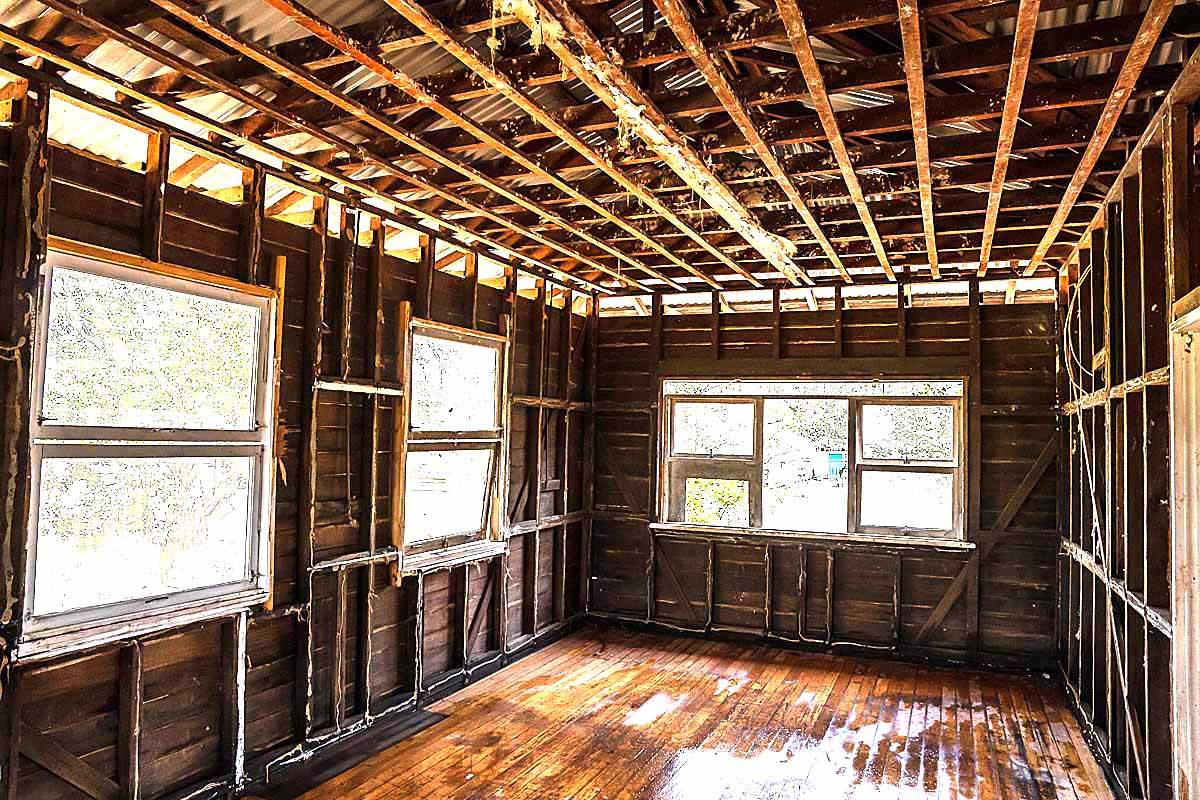
At 125 and 127 Tweed Street, North Lismore, two uninhabitable homes were selectively deconstructed to recover their materials. The work recovered premium old-growth hardwoods including ironbark, cedar, tallowwood and blackbutt from the region’s Big Scrub rainforest, timber that is prized today and effectively impossible to source.
Local makers – builders, furniture-makers, artists and craftspeople – then transformed the salvaged timbers into more than 50 new pieces that honour their origin while demonstrating reuse.
It was a small-scale example of what could be achieved with right infrastructure and support. The pilot worked through the steps of deconstruction, material storage, product design and manufacturing, to develop the recommendations made in the report.
The pilot also showed why deconstruction isn’t yet standard practice. Without national guidelines, recovery facilities or an agreed way to compare costs, it’s difficult to contract deconstruction at scale – especially within the timeframes and budgets of a major recovery program. The report’s recommendations are aimed at closing that gap:
• Deconstruction guidelines. Australia has well-established standards for demolition, but nothing equivalent for deconstruction. Clear, practical guidelines would give councils, contractors and governments a shared way of working.
• Material recovery infrastructure. A facility to process, store and resell recovered materials would make deconstruction viable, and could in time grow into a regional hub for circular manufacturing and local jobs.
• A clear way to weigh the value of reuse. Deconstruction is often assumed to cost more than demolition, yet the report notes this has rarely been properly tested. A framework for comparing the real costs and benefits would help decision-makers see the full picture.
Australia’s construction and demolition sector is forecast to generate around 42 million tonnes of material by 2030. Current waste systems already do a good job of diverting material from landfill through recycling such as woodchipping.
The pilot tested whether we could go one step further up the waste hierarchy – from recycling to reuse – which keeps more of each piece of timber whole and useful.
International research cited in the report indicates careful deconstruction can save an average of 7.6 tonnes of CO₂-equivalent per home, and that deconstruction programs overseas support several times more jobs than conventional demolition.
“Demolition is fast, but it treats century-old hardwood the same as rubble,” said Associate Professor Berto Pandolfo, the project lead from UTS. “This pilot showed that with care, timber can be recovered intact and re-made into things people value.
“What’s missing isn’t capability or community will – it’s the guidelines, infrastructure and assessment tools that would let deconstruction operate at scale.”
Northern Rivers experience
Dan Etheridge, Engagement Director at Living Lab Northern Rivers, said: “The Northern Rivers has just lived through Australia’s largest property buyback program. That gave us a rare chance to test these ideas in real conditions, and the makers proved the concept. The opportunity now is to build the systems so the next community facing this doesn’t have to start from scratch.”
NSW Reconstruction Authority CEO, Kate Fitzgerald said: “As part of the Resilient Homes Program the NSW Reconstruction Authority has been prioritising the relocation, reuse and recycling of buyback properties wherever we can.
“To date we have had 450 homeowners opting in buyback contracts to salvage materials, and more than 400 buyback homes identified as suitable for reuse through relocation. We have also seen 74% of material from demolished homes recycled to date, excluding material contaminated by asbestos.
“By finding new uses for these homes and materials, we are reducing waste, preserving valuable housing stock and helping address housing challenges in flood-affected regions.
“This approach ensures the benefits of the program extend beyond risk reduction, supporting local communities, creating opportunities for vulnerable residents to access housing, and making the most of resources that would otherwise be lost.”
Custodianship framework
Building on this project, Living Lab Northern Rivers and the RA are supporting Jagun Alliance to help turn this knowledge into practice through a First Nations lens.
This Aboriginal-led initiative is assessing flood-affected homes for culturally significant timbers, seeking to develop a custodianship framework to ensure materials are returned to community in ways that reflect their cultural and environmental value.
At the same time, the project will generate important scientific and practical insights into endemic timber species, helping inform future land use planning and revegetation across the Northern Rivers.
Oli Costello, Executive Director, Jagun Alliance said: “Many of these timbers are culturally significant species that reflect our cultural landscapes. They were once ancient forests as far as the eye could see, cared for by our elders of this place. They hold ancestral memories of kinship and custodianship that could help us.”
The report frames deconstruction as a way to strengthen existing waste systems rather than replace them – one that keeps cultural and material value within the community. With demolition and rebuilding activity rising across Australia, the report’s authors say there is a real opportunity to put these lessons to work.
The Circular Timber report is available at: llnr.com.au