
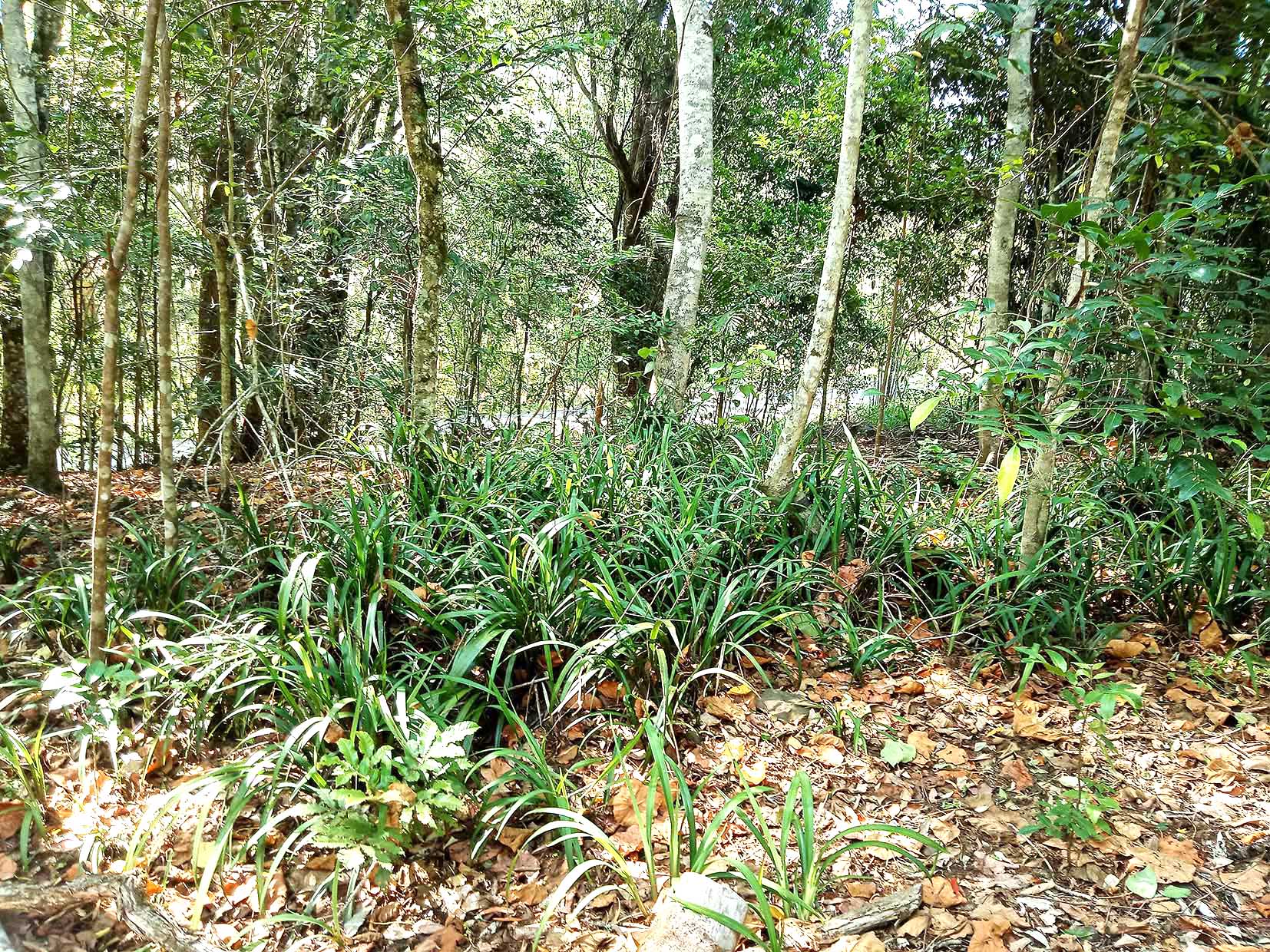
Love the summer days – warm, wet, everything growing flat out. Time to get out and weed!
Landholders have a biosecurity duty and requirement to manage weeds on their properties. At a bare minimum, do not let them spread.
Depending on the region, different species have varying management requirements ranging from complete eradication to simply control. Control means don’t let them spread. Do not let them set fruit and seed and cause further impact.
Look for opportunities to protect and enhance landscapes, be it in suburban block gardens, acreage lifestyle properties or working farms. Don’t plant invasive species and appropriately manage the ones that are already present or arrive later. They will come, if not already there.
Much of the Northern Rivers was clear-felled and farmed. Dairying was popular after all the trees were cut down, irrevocably erasing vast tracts of indigenous ecosystems.
The Big Scrub, a vibrant patch of subtropical rainforest in Northern NSW, originally covered 75,000 hectares. By the beginning of the 20th century, there was around 1% left after the farmers got through clearing as per the conditions of their occupancy.
Thousands of exotic plants from all parts of the planet were introduced by the new settlers. They replaced the thousands of local species of trees, shrubs, vines, epiphytes, and groundcovers that made up the subtropical rainforest.
Not all imported plants are problematic. Currently around 2,700 plants are on official weed lists, and 400 of these are considered serious problems.
In the late 20th century, tree changers began to replace some of the farmers. City folk bought old banana and dairy farms, converted the bails, planted vegetable gardens and fruit trees. Many started regenerating the forests.
Damaged ecosystems readily allow the establishment of exotic species. Nature will fill the vacuum. Some of these weeds can outcompete, outgrow, and smother species we want to prioritise, our food species, our bush regeneration, and our ornamental gardens.
Some claim we need weeds to restore the land to health. They are playing a role. Though, if there were no weeds, the native pioneers would step up if the seed bank was still intact. If not, the wind, water and birds and bats would soon transport the necessary seed to needy areas.
Wattles are quick growing, shed nitrogen-rich leaves and create a fertile environment for regenerating forest. Skip the lantana, madeira vine, cats claw, giant devil fig, coral tree, privet, groundsel bush, ragweed and crofton weed stages and go straight to native forest.
There are a lot of weeds out there and it can be hard to know where to start. What are the worst weeds? Weeds can be triaged. Ones that don’t cause a problem and may even be useful all the way through to exterminate on sight. Identify and act promptly as required.
New weeds will continue to come. Some like parthenium weed, Parthenium hysterophorus, will cause serious problems if it naturalises in NSW as it has in parts of Central and Southern Queensland.
Chook owners and hobby farmers look out for this pretty, frilly, fast-growing herbaceous weed. Several incursions into NSW originating from contaminated chicken feed have been identified and controlled. Seed can remain viable for 10 years, so it can be a sleeper and pop up anytime. Travellers from infested zones in Queemsland can also carry seed.
Looking to escape the city and move to the Northern Rivers? If you’re not familiar with local plant species, consider a vegetation survey to see what you might be up against. There will be weeds.
“Priced low for a quick sale” might mean quick sale before the weeds grow back.
Happy weeding.