
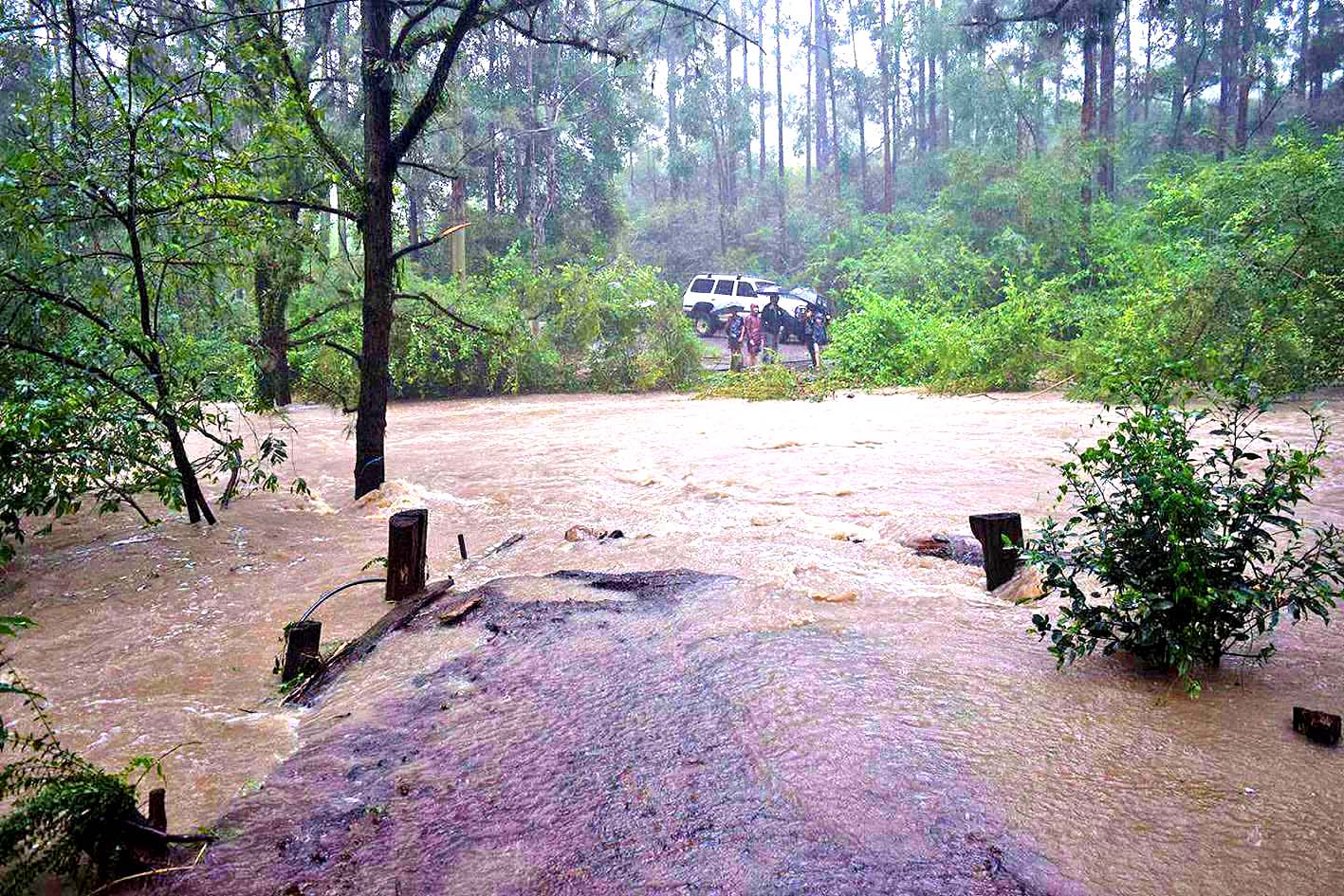
Opposition is growing as communities across the Richmond River catchment find out what the ten enormous detention dams modelled in the CSIRO flood report could mean for their homes, farms, roads, creeks and valleys.
The prospect of deliberately holding huge volumes of floodwater in our communities, in some places for up to two weeks, is bringing people together. Valleys United has formed and is bringing people together to have their voice heard.
This community-led resistance has already made waves, and some of the drop-in information sessions, particularly Kyogle and Lismore, turned into spontaneous expressions of our diverse communities and their opposition to top-down technocratic ‘solutions’ to the Richmond River, and individualised and disempowered approaches to consultation.
People living next to these proposed mega-dam engineering developments are mobilising locally and regionally. It’s how our communities exercise their power and care for each other and our living environment.
More than one hundred people packed into the Rock Valley Hall in July, a big turnout for a small valley community at short notice. Since then, people have been talking to their neighbours, making maps, sharing expertise and working through the details.
The organised expression of these discussions is Valleys United, and meetings in and around Nimbin in late August and early September will bring another part of the upper catchment into this really important resistance.
I am incredibly encouraged by this, because community knowledge, vision and hope belong in the middle of decisions about the future of the Richmond River, along with the science, the modelling and the growing body of evidence from around the world about how we can make whole catchments safer and healthier.
We now have one important piece of science from CSIRO, which I welcome because it shows that even with all ten dams operating during a flood like February 2022, the levee would still be over-topped and Lismore would still be subject to catastrophic flooding. But there is another body of flood science that was left out, despite it being raised repeatedly by the community during consultation.
This is Nature-based flood management, approaching the whole landscape as a living system that functions best when it is natural and healthy. Natural flood management has moved into mainstream government flood policy in England, and during the 2015 floods at Pickerling, the combination of slowing the flows and more vegetation reduced the flood peak by around 15 to 20%, with roughly half of that reduction attributed to the upstream land management measures.
In the Netherlands, the ‘Room for the River’ program is moving dykes back, restoring floodplains, creating side channels and deliberately giving rivers more space.
In Belgium, similar integrated approaches are being taken with their ‘Sigma Plan’ that is restoring wetlands and estuarine habitat, and its economic assessment found benefits extending well beyond avoided flood damage.
The estimated €469 million cost of the program was outweighed by around €740 million in flood protection benefits, with another €22 million in recreation benefits and €130 million in ecological benefits.
This is an incredibly exciting part of the catchment conversation, because every dollar spent restoring our catchment can keep supporting community well-being, and nature benefits every day between floods.
Imagine a serious, long-term program of upper catchment and riparian revegetation employing local people to collect seed, grow plants, fence (including virtual) waterways, restore gullies and plant and maintain forests, alongside payments and agreements with farmers who provide parts of their land for water retention and restoration.
It would mean jobs and investment flowing into the valleys rather than enormous public expenditure being concentrated almost entirely in earthworks and concrete, while healthier soils and reduced erosion help farmers, cleaner water and reduced sediment improve the Richmond River, restored habitat helps koalas, platypus, fish and threatened species, growing vegetation stores carbon, and cooler, wetter landscapes become more resilient through drought and heat.
The exciting and hellishly pragmatic thing about nature-based solutions is what happens when there isn’t a flood. A detention dam waiting for the next disaster provides no benefit and lots of harm, while a restored catchment is working all the time, producing cleaner water, healthier soils, habitat, shade, carbon storage, beautiful landscapes and healthier rivers while building greater capacity to deal with the next drought, heatwave and flood.
NSW is already spending billions dealing with the consequences of natural disasters, and our region knows better than almost anywhere what those costs look like when they hit us at home. We should be prepared to make an investment of comparable ambition in rebuilding the natural systems that support our communities in the first place.
Rock Valley, Booyong, Corndale, Nimbin and the other valleys across the upper Richmond, along with others down the catchment, are organising because people can see that the choices we make now will shape this catchment for generations.
I know we can aim much higher than shifting floodwater from one community to another, and use the extraordinary science we now have, together with the knowledge of people who live here and the experience of communities around the world, to build a Richmond River catchment that is safer, healthier, more productive and more alive. Everyone wins when community and nature are front and centre. Let’s make it happen, like our lives depend on it.